What is a Printer's Key (Number Line)? A Complete Guide for Authors and Book Collectors
Discover what a printer's key is and why it matters for identifying book printings. Learn how to read number lines, understand their history, and what they mean for collectors and self-publishers.
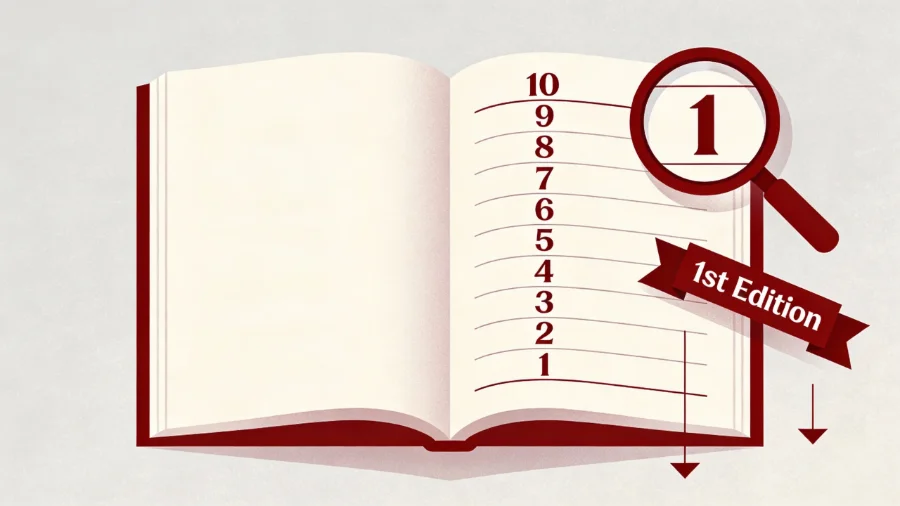
If you’ve ever picked up a book and looked at the copyright page, you may have noticed a curious string of numbers near the bottom. This sequence often something like “10 9 8 7 6 5 4 3 2 1” or “1 3 5 7 9 10 8 6 4 2”, is called a printer’s key or number line. In this blog post, lets understand the role of the printer’s key in book publishing.
A printer’s key, also known as a number line, is a string of characters printed on the copyright page (usually the verso of the title page) of a book. Its primary purpose is to identify which specific printing (also called an impression) of a particular edition the book belongs to.
Think of it as a book’s birthmark, each printing run gets its own unique identifier that tells you exactly when that copy rolled off the press.
Why Does the Printer’s Key Matter?
The printer’s key serves several important functions:
-
For Book Collectors: First printings of popular books can be worth significantly more than later printings. The number line is the quickest way to identify if you have a true first printing.
-
For Publishers: It provides an efficient tracking system for inventory management and identifying which printing run a specific book came from.
-
For Authors: Understanding print runs helps authors track the success and spread of their work over time.
-
For Bibliographers: It allows precise cataloging and documentation of book publishing history.
How to Read a Printer’s Key
The key principle is simple: the lowest number visible indicates the current printing. With each subsequent printing, the lowest number is removed from the sequence.
Sequential (Ascending) Format
1 2 3 4 5 6 7 8 9 10- If “1” is present → First printing
- If the line shows “3 4 5 6 7 8 9 10” → Third printing (numbers 1 and 2 have been removed)
Sequential (Descending) Format
10 9 8 7 6 5 4 3 2 1This format works identically, the “1” on the right indicates a first printing. Publishers sometimes prefer this format as it reads more naturally from left to right as numbers are removed.
Alternating/Centered Format
1 3 5 7 9 10 8 6 4 2This clever arrangement keeps the number line visually centered as characters are removed from alternating ends. When “1” is removed, then “2,” the remaining numbers stay roughly balanced on the page.
Complex Keys with Year and Printer Codes
3 4 5 6 7 8 9 10 APC 00 99 98 97 96This example tells us three pieces of information:
- 3: This is the third printing
- 96: This printing was made in 1996 (the lowest visible year)
- APC: An identification code for the printing company (e.g., “Acme Printing Corporation”)
Historical Context: Why Remove Numbers Instead of Adding Them?
The printer’s key system became common in the mid-20th century, and its design reflects the technology of that era. In the days of letterpress and offset printing, making changes to a set printing plate was labor-intensive and expensive.
Here’s the clever bit: by pre-setting a full string of numbers originally, printers only needed to remove (or “rub off”) a character for each reprint rather than adding new ones. Erasing a character from a metal printing plate was simple and cheap. Adding a new character would require much more work, essentially resetting part of the plate.
This practical consideration shaped a system that has persisted for decades, even as technology has evolved.
Variations in Number Line Systems
Year Lines
Many publishers include a sequence of years alongside or instead of printing numbers:
24 25 26 27 28 29 30In this case, the lowest year visible indicates when that specific impression was printed. If the line shows “26 27 28 29 30,” the book was printed in 2026.
Letter Systems
Some publishers use letters of the alphabet instead of numbers:
A B C D E F G H I JHere, “A” indicates the first printing, “B” the second, and so on.
Publisher-Specific Formats
Different publishers have developed their own conventions over the years. Some examples include:
- Random House: Often uses a number line with the printing number spelled out (“First Edition” or “First Printing”)
- Academic publishers: May include specific codes for different campus or regional printings
- International editions: Sometimes include country codes or language identifiers
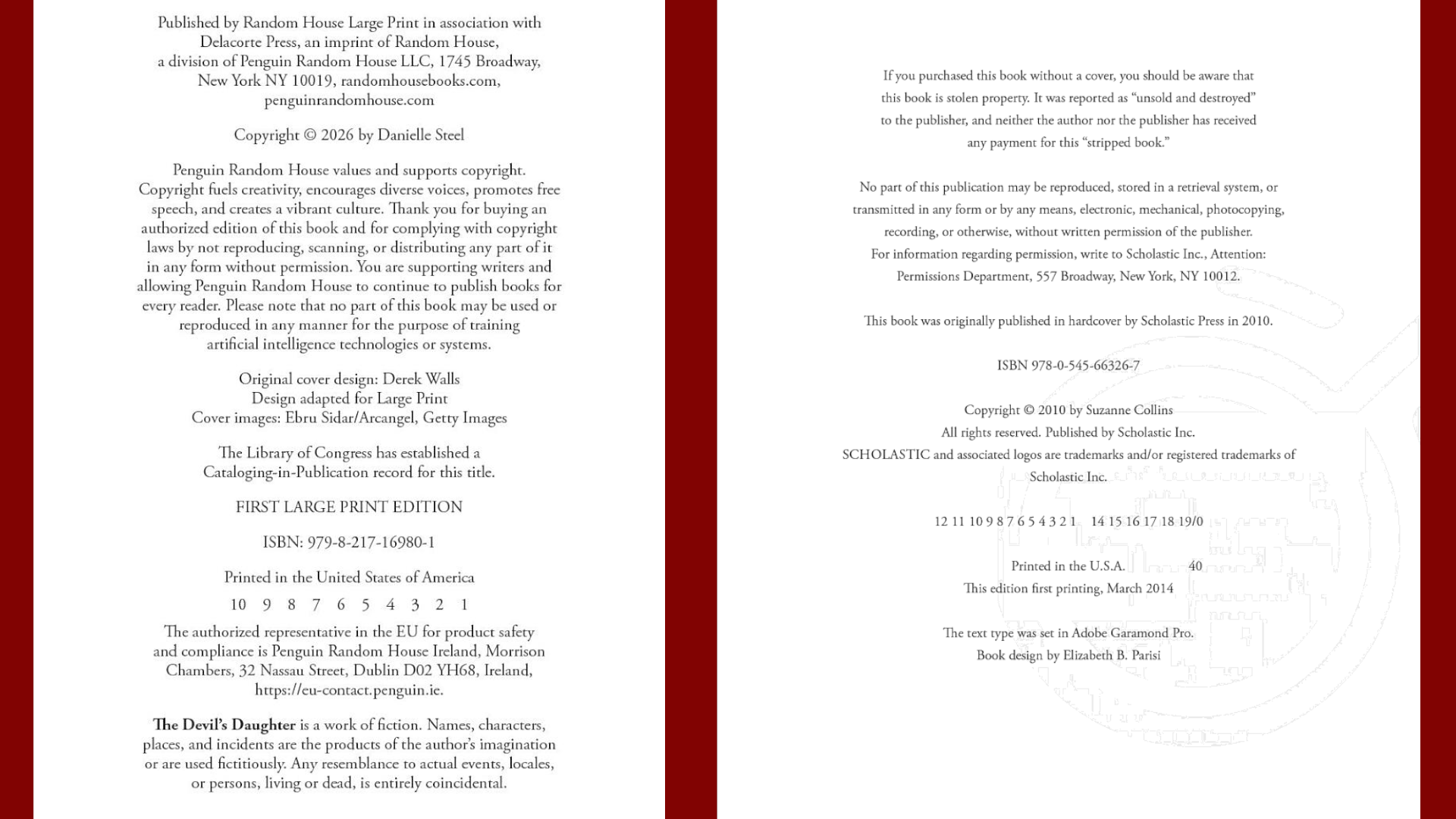
Below are example of two copyright pages with printer’s keys:
First Edition vs. First Printing: What’s the Difference?
This distinction is crucial for collectors:
-
First Edition: Bibliographers define this as all printings from the same basic setting of type. An edition represents a particular version of the text.
-
First Printing (or First Impression): This is the very first print run of a first edition, the copies that came off the press before any additional printings were ordered.
What collectors typically seek is the first printing of the first edition the original batch of books produced when a title was first published. The printer’s key is the quickest way to identify this.
Modern Changes: Digital Printing and Print-on-Demand
The rise of computer-to-plate (CTP) technology and print-on-demand (POD) publishing has changed the game. With digital printing:
- The entire printing plate can be easily re-imaged for every printing
- There’s no practical advantage to the “removal-only” system
- Publishers can now easily add or change any information between print runs
However, many publishers maintain the traditional number line format out of convention and because it remains a familiar, trusted system for tracking printings.
For self-publishers using POD services like Amazon KDP or IngramSpark, each print is technically its own “printing.” Some self-publishers choose to include a number line for professionalism, while others find it less relevant in the POD context.
How Self-Publishers Can Use Printer’s Keys
If you’re self-publishing a book, including a printer’s key on your copyright page demonstrates professionalism. Here’s how to implement it:
-
Start with a full number line: Include something like “10 9 8 7 6 5 4 3 2 1” in your first printing.
-
Update with each new printing: When you make corrections or updates and order a new print run, update your file to remove the lowest number.
-
Consider adding a year line: This helps readers know when their copy was printed: “25 26 27 28 29 30”
-
Be consistent: Choose a format and stick with it across all your titles.
Sample Copyright Page with Printer’s Key
Copyright © 2025 by Your Name
All rights reserved.

ISBN: 978-X-XXXXX-XXX-X

Published by Your Publishing Company
City, Country
www.yourwebsite.com

First Edition
10 9 8 7 6 5 4 3 2 1
Quick Tips for Book Collectors
If you’re hunting for valuable first printings, keep these tips in mind:
-
Always check the number line: Look for the “1” in the sequence.
-
Look for “First Edition” statements: Many publishers include explicit text like “First Edition” or “First Printing.” However, not all first editions include such statements.
-
Know your publishers: Different publishers use different systems. Research the specific conventions of the publisher you’re interested in.
-
Check for additional points: First printings often have other identifying marks, typos that were corrected in later printings, specific dust jacket prices, or particular binding colors.
-
Be wary of book club editions: These often look similar to first trade editions but are typically valued differently by collectors.
Conclusion
The printer’s key is a elegant solution born from the practical constraints of traditional printing technology. While modern digital publishing has made other tracking systems possible, the number line remains a respected convention that connects today’s books to their publishing heritage.
Ready to publish your own book with professional standards? Learn more about obtaining your own ISBN and setting up your title verso page properly. For comprehensive self-publishing and book marketing services, visit Bookllo Publishing, we charge service fees upfront, allowing you to retain 100% copyright ownership and receive full royalties for your book.

Araix Rand
Book Publicist
Araix has been helping authors with self-publishing and marketing their books. Additionally, he writes for various business and marketing blogs.
More posts by Araix Rand