How to Get an LCCN as an Indie Author (Even if You’re Not in the US)
Want your book in the Library of Congress? Discover how to get an LCCN as an indie author, including the secret LLC workaround for non-US citizens.
If you ask me, there is nothing quite like the feeling of seeing your book listed in the Library of Congress. It’s the ultimate mark of “making it” in the publishing world. But for many indie authors, especially those outside the United States, the LCCN (Library of Congress Control Number) feels like an exclusive club.
Let me tell you: if you are a US-based author and publishing wide that means not just selling your book on Amazon. Then getting LCCN will be a right move for you. Getting an LCCN as a non-US citizen is possible too but there is work around and cost little.
In this guide, I’m going to break down what an LCCN is, why it matters for your metadata, and how you can hack the system using a US-based LLC.
What is an LCCN and Benefits?
First, let’s clear up a common myth: an LCCN is not a copyright registration, and it’s certainly not an ISBN.
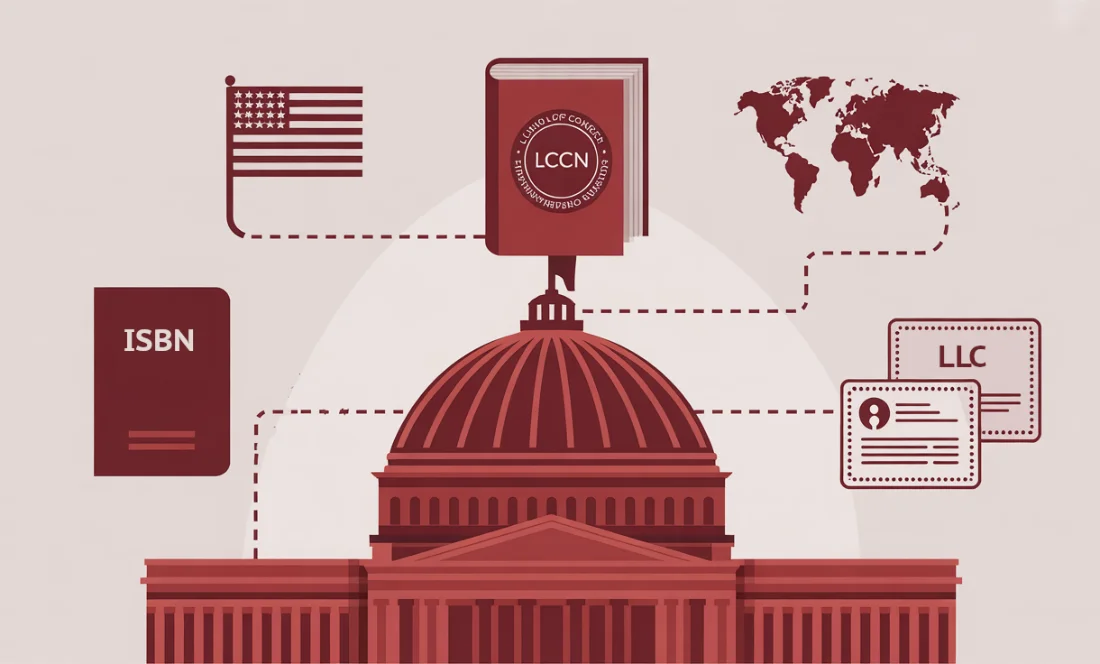
The Library of Congress Control Number is a unique identification number assigned by the Library of Congress to a book’s bibliographic record. Think of it as a “social security number” for your book within the US library system. When a librarian wants to find your book to put it on their shelves, they use the LCCN to pull up the correct cataloging data.
The Benefits of Having an LCCN:
- Instant Credibility: Having an LCCN printed on your copyright page tells bookstore managers and librarians that you are a “real” publisher, not just someone who uploaded a PDF to the internet.
- Rich Metadata: It ensures your book is indexed correctly in the most important database in the world. As we’ve discussed before, book metadata on OpenLibrary is crucial, but the Library of Congress is the gold standard for library system.
- Library Sales: Most US libraries will not even consider buying your book if it doesn’t have an LCCN pre-assigned.
The ISBN Connection
Before you even think about applying for an LCCN, you need ISBN for your book. Here is the catch: you cannot use a free Amazon KDP ISBN.
If you use an Amazon “free” ISBN, Amazon is listed as the publisher of record. The Library of Congress’s Preassigned Control Number (PCN) program is only for publishers. To get through the door, you must own your ISBN. I recommend buying a ISBN directly from Bowker ISBN Agency to ensure you have full control over your publishing and imprint name. Using Amazon free ISBNs effectively disqualifies you from many of these professional cataloging benefits.
How to Obtain an LCCN as a US-Based Author
For authors living in the US, the process is straightforward but time-sensitive. You must apply for a Preassigned Control Number (PCN) before your book is published.
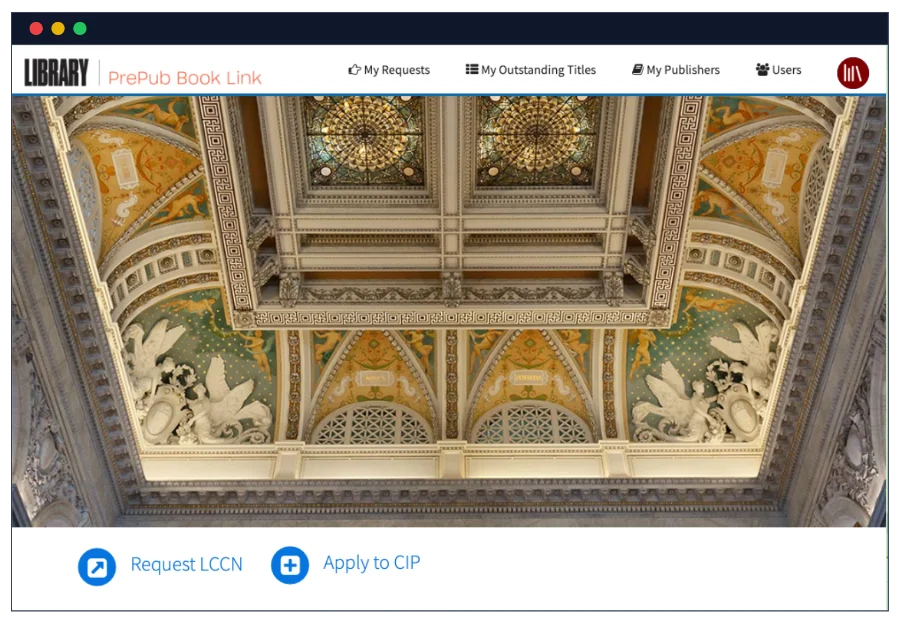
- Register: Sign up for an account on the PrePub Book Link (PPBL). You can sign up for account as a self publishing authors and a publisher.
- Apply: You will have two option: Apply LCCN (Library of Congress Control Number) and Apply to CIP (Cataloging in Publication). Choose one option, see the difference below. Provide your book’s metadata and your Bowker-purchased ISBN.
- Wait: LCCN takes 1-2 business day and CIP takes 1-3 weeks to receive your number.
- Print: Add the number to your copyright page.
- Deposit: Once the book is printed, you are legally required to send a physical copy of the “best edition” to the Library of Congress.
Request LCCN vs Apply to CIP
The Preassigned Control Number (PCN) Program by Library of Congress, allows publishers to request a Library of Congress Control Number (LCCN), for Cataloging. LCCN unique identifier is obtained before a book is published.
Applying for CIP involves requesting a full bibliographic record (including the LCCN unique identifier) for inclusion in the book. These programs are mutually exclusive, a title cannot participate in both. Applying for CIP has stricter eligibility requirements and it is for established U.S. publishers.
Getting an LCCN as a Non-US Citizen
Here is where it gets tricky for my international friends. To be eligible for the PCN program, you must be a US publisher. This technically requires:
- A physical US mailing address capable of receiving books and answering phone calls. Mail forwarding won’t work.
- A US phone number.
- A US city listed on the title page as the place of publication.
Does this mean you’re locked out? No.
If you are a non-citizen and want your book to have a serious US presence, you can register a US LLC (Limited Liability Company). By doing this, your LLC becomes the “US Publisher.” You can get a registred virtual office service that provides the required US address and phone number.
If you’re ready to go through the hurdle of establishing your own publishing presence in the US, I recommend using a service like formllc.us to set up your entity. Once your LLC is established, you can apply for the LCCN as a US-based business entity, regardless of where you physically live.
The Downsides
I’m all about being honest with you, and the truth is that the LCCN isn’t for everyone.
- Print Only: The PCN program is currently for print books only. If you are only publishing an eBook, you don’t need (and can’t get) an LCCN.
- The Shipping Cost: You have to mail a physical book to Washington D.C.
- Timeline: You can’t apply after the book is out. If you already hit publish, you’ve missed the boat for the pre-assigned program.
Conclusion: Start with the Basics
Look, if you can’t get an LCCN as a self-publisher (US-based or non-US-based), don’t sweat it. While it’s a great “nice-to-have,” it won’t make or break your success as an author. Most of book readers purchase books online. Focus on marketing your book. If your book becomes successful, then book retailers will carry your book on their own, they’re in the business of making money too.
Buy your US-based ISBN here and start your publishing journey the right way. Your book metadata and your future readers will thank you.

Araix Rand
Book Publicist
Araix has been helping authors with self-publishing and marketing their books. Additionally, he writes for various business and marketing blogs.
More posts by Araix Rand