The International Barcodes Network: A Web of Suspicious UPC Reseller Sites
Discover the truth about the International Barcodes Network, a web of 100+ nearly identical websites selling UPC barcodes across 120+ countries. Learn how to spot suspicious barcode resellers, understand the real cost of official GS1 barcodes, and find free alternatives for generating ISBN barcodes.
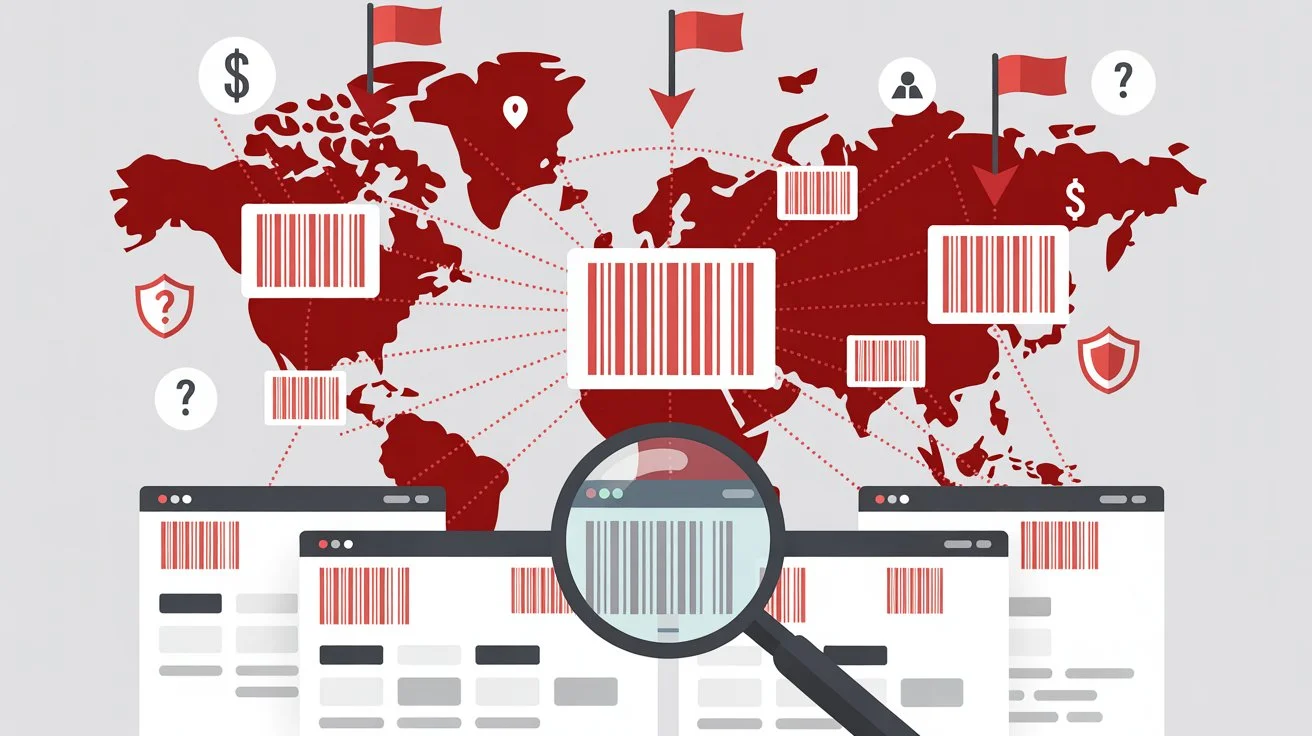
Have you ever searched for “buy UPC barcode” and noticed that dozens of websites look almost identical? You’re not imagining things. There’s a network of over 100 websites operating across 120+ countries, all claiming to be “Authorised Members of the International Barcodes Network.” But what exactly is this network, who’s behind it, and should you trust them with your money?
Let me tell you what I found after digging into this rabbit hole.
What is the International Barcodes Network?
The International Barcodes Network (IBN) presents itself as a group of barcode suppliers with a global presence. Their main hubs include internationalbarcodes.com, internationalbarcodes.net, megabarcodes.com, and qualitybarcodes.com.
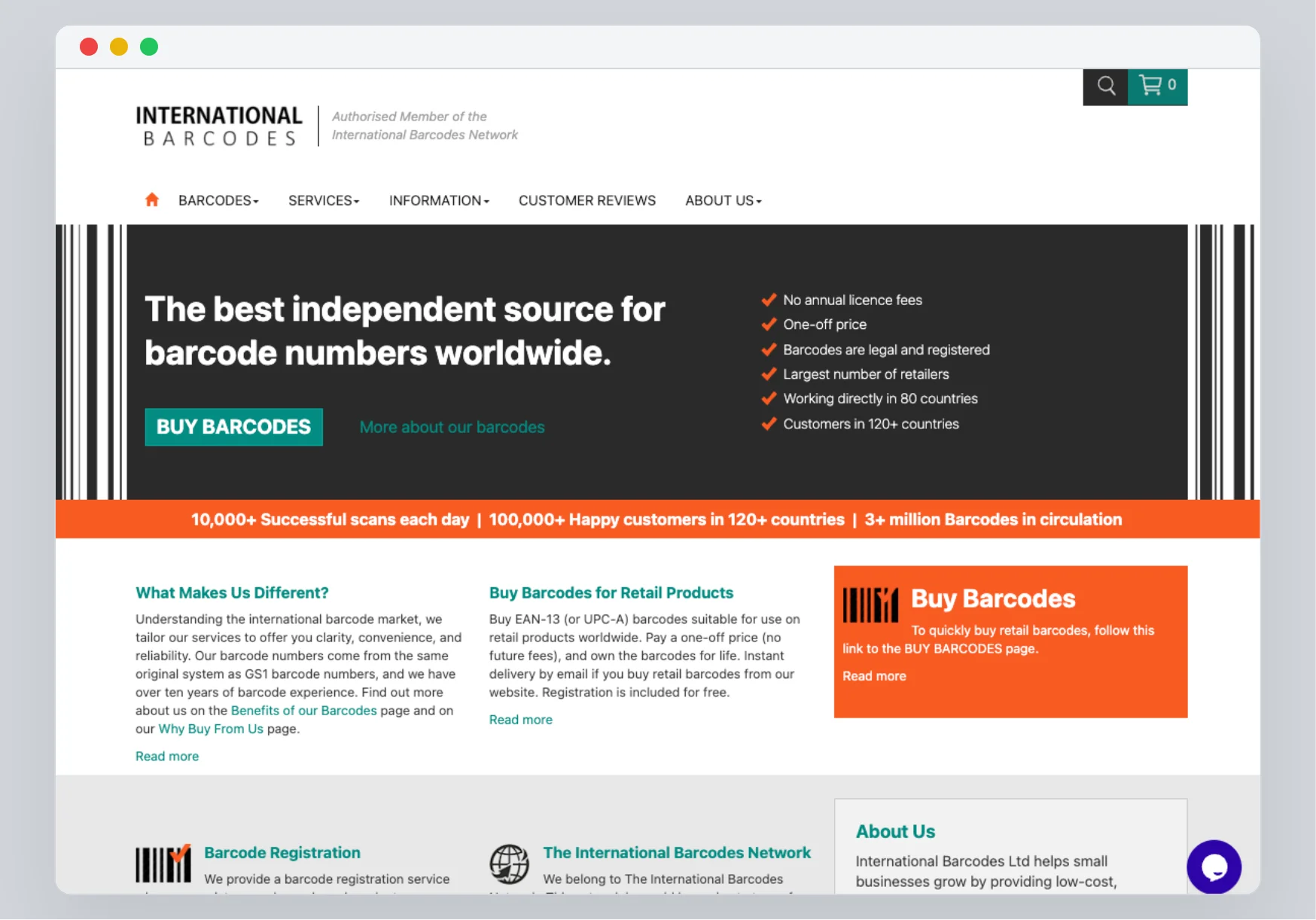
But here’s where it gets interesting. The network operates country-specific domains that all look suspiciously similar:
- Europe: barcodes.co.uk (UK), barcodesdeutschland.de (Germany), codesabarres.fr (France), barcodesitalia.it (Italy)
- Asia/Oceania: indiabarcodes.co.in (India), barcodesthailand.com (Thailand), barcodes.com.au (Australia)
- Africa: barcodeskenya.com (Kenya), nigeriabarcodes.com (Nigeria), barcodes.co.za (South Africa)
- Americas: barcodescanada.ca (Canada), codigosdebarras-mexico.com (Mexico)
These websites share nearly identical designs, similar terms of service, and the same technology stack. This strongly suggests they’re all operated by the same person or group, despite appearing as separate local businesses.
The strategy is clear: dominate local search results in every country by creating localized domains. When someone in Germany searches for “kaufen barcode,” they find barcodesdeutschland.de. When someone in India searches for “buy barcode India,” they find indiabarcodes.co.in. Same network, different wrapper.
Red Flags to Watch For
If you’re considering buying barcodes from any of these sites, here are some warning signs I’ve noticed:
1. Identical Website Templates
When dozens of “different” companies across the world use the exact same website design, same layout, and same copy, just translated into different languages, that’s not a coincidence. That’s a coordinated operation.
2. “Authorised Member” Claims to a Non-Recognized Organization
The International Barcodes Network is not an official standards body. It’s not GS1. It’s not recognized by any international trade organization. The term “Authorised Member” sounds official but means nothing when the network itself has no authority to authorize anyone.
3. Confusing Product Offerings
This is where it gets particularly problematic. Some sites in this network appear to sell legitimate UPC/EAN codes (resold from pre-2002 prefixes), while others are selling something very different: just the barcode image.
Take isbnbarcodes.org as an example. This website charges around $30 for an ISBN barcode image. Not an ISBN number, just the graphical image of a barcode. Users must provide their own ISBN number when purchasing. They’re literally paying $30 for something that can be generated for free in seconds.
The Real Cost of Official UPC Barcodes (GS1)
Before we go further, let’s understand what legitimate UPC barcodes actually cost when purchased directly from GS1, the official global standards organization.
Single GTIN (Individual Barcode):
- $30 one-time fee
- No annual renewal required
- Ideal for businesses with just a few products
GS1 Company Prefix (Multiple Barcodes):
| Number of Items | Initial Fee | Annual Renewal |
|---|---|---|
| 1-10 items | $250 | $50/year |
| 1-100 items | $750-1,000 | $150/year |
| 1-1,000 items | $2,500-3,500 | $500/year |
| 1-10,000 items | $6,500-8,500 | $1,300/year |
Why does GS1 matter? Major retailers like Amazon and Walmart often require products to have UPC codes directly registered to your company in the GS1 database. They use tools like “Verified by GS1” to check. If your barcode isn’t linked to your business, your product listings could be rejected or your seller account suspended.
The 2002 Lawsuit That Created Barcode Resellers
You might be wondering: how are third-party barcode resellers even legal? The answer goes back to a 2002 class-action lawsuit against GS1 (then known as the Uniform Code Council or UCC).
The settlement allowed companies that had purchased GS1 prefixes before 2002 to legally resell individual UPC codes from those prefixes. This created a legitimate secondary market for barcodes.
However, there’s an important catch: barcodes purchased from resellers remain registered to the original company’s prefix, not your business. This is the gray area that makes resold barcodes potentially problematic for Amazon sellers and others who need retailer-verified codes.
Some resellers are legitimate businesses operating within this framework. Others are taking advantage of consumer confusion to sell something of far less value.
Barcode Image vs. Barcode Number
This distinction is crucial, and it’s where many buyers get confused or deceived.
A barcode number (UPC, GTIN, or ISBN):
- Is a unique numerical identifier
- Gets registered in official databases
- Is required for inventory management and retail sales
- Has actual licensing value
A barcode image:
- Is just a graphical representation of that number
- Can be generated for free by anyone who has the number
- Has zero licensing value
- Takes 5 seconds to create with free online tools
When isbnbarcodes.org charges $30 for a barcode image, they’re selling you something that literally costs nothing to produce. If you already have an ISBN number, you don’t need to pay anyone for a barcode image.
Generate ISBN Barcodes for Free
Here’s the good news: you can create publishing-standard ISBN barcodes absolutely free.
ISBNBarcode.org is a free tool we built specifically to help self-publishing authors generate professional-grade ISBN barcodes. Unlike other tools, it creates barcodes that meet publishing standards with correctly hyphenated ISBNs.
Features:
- Instantly generates EAN-13 barcodes from your ISBN
- Proper ISBN hyphenation according to international standards
- High-resolution images suitable for print
- Completely free, no registration, no hidden fees
- No software installation required
You can also generate a price barcode separately and combine them using a free tool like Canva. This gives you the exact same result that some websites charge $30 or more to produce.
Compare that to paying $30 on isbnbarcodes.org for a simple image file. The choice seems obvious.
How to Stay Safe When Buying Barcodes
If you actually need to purchase UPC or EAN codes (not just barcode images), here’s how to protect yourself:
1. Buy directly from GS1 if possible
For serious retail products, especially if you’re selling on Amazon or Walmart, purchasing directly from GS1 is the safest option. Yes, it costs more, but your codes will be properly registered to your business and verified by major retailers.
2. Use free tools for barcode images
Never pay for a barcode image. Tools like ISBNBarcode.org and other free generators create identical images to what paid services provide. Save your money.
3. Research any reseller thoroughly
If you’re considering a third-party barcode reseller, do your homework:
- How long have they been in business?
- Can you find independent reviews (not testimonials on their own site)?
- Do they clearly explain what you’re getting?
- Are they transparent about not being GS1?
4. Avoid coordinated SEO networks
If a website claims to be an “Authorised Member” of a network that doesn’t have any official recognition, that’s a red flag. If it looks identical to dozens of other sites in different countries, be very cautious.
5. Understand what you’re buying
Before paying, make absolutely sure you understand whether you’re buying:
- An actual barcode number (UPC/EAN/GTIN)
- Just a barcode image
- A registration in an unofficial database that has no retail value
Conclusion
The International Barcodes Network represents a concerning trend: coordinated networks of similar-looking websites designed to dominate search results and capture buyers who don’t know better. While some of these sites may sell legitimate resold UPCs, others appear to be selling barcode images for prices that don’t reflect their actual value.
If you need ISBN barcodes for your self-published book, use ISBNBarcode.org to generate them for free. If you need UPC codes for retail products, consider buying directly from GS1 to ensure your codes are properly registered and accepted by major retailers.
Don’t let an impressive-looking website network convince you to pay for something you can get for free, or worse, something that won’t even work for your intended purpose.

Araix Rand
Book Publicist
Araix has been helping authors with self-publishing and marketing their books. Additionally, he writes for various business and marketing blogs.
More posts by Araix Rand