Welcome to Bookland: The Fictitious Country Where All Books Live
Did you know your book has citizenship in a country that doesn't exist? Discover the strange history of Bookland, Musicland, and why your barcode starts with 978.
Did you know that every time you publish a book, you are granting it citizenship in a country that doesn’t exist?
It has no borders, no army, and no flag. But it has a population of billions, and it exports more culture than any other nation on Earth.
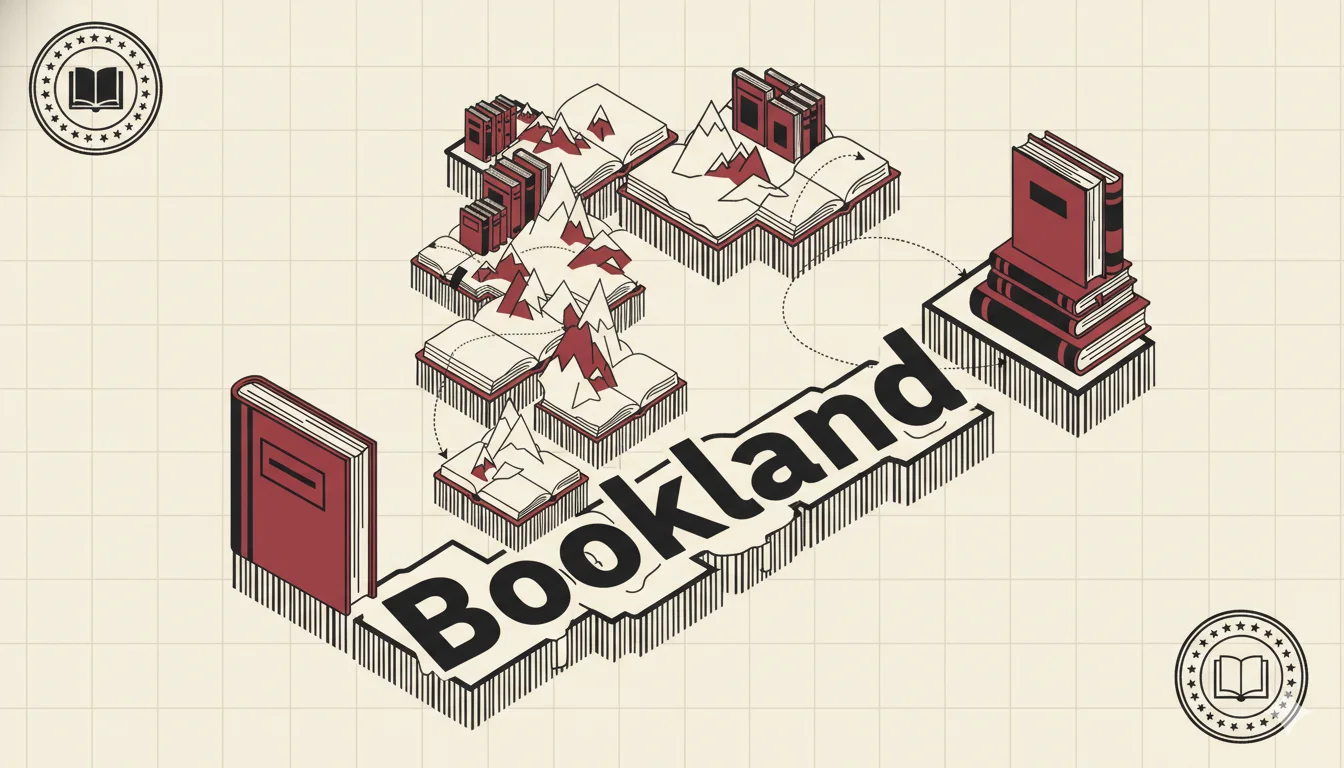
This country is called Bookland.
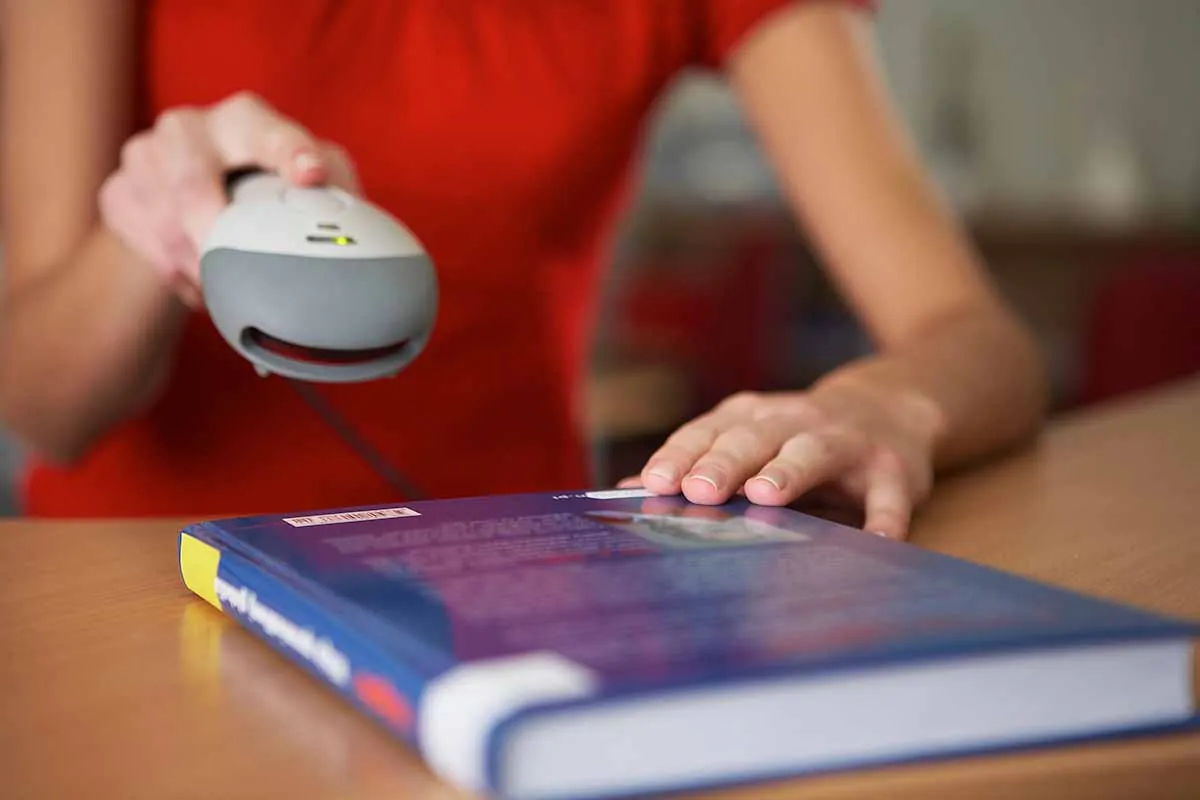
If you pick up any book near you and look at the barcode on the back, you’ll likely see it starts with the numbers 978 if not then 979. That number isn’t random. It’s a country code. And in the logic of global retail, it signifies that this product comes from the sovereign territory of Bookland.
As indie authors, we often view ISBNs as just another bureaucratic hoop to jump through an expensive string of numbers we have to buy from agencies like Bowker. But the story of why those numbers exist is actually a fascinating mix of history, diplomacy, and clever engineering.
So, let me take you on a tour of the strange geography of barcodes.
The Great Barcode Clash
To understand Bookland, we have to go back to a time when the world was split in two.
In one corner, we had the Book World. For decades, we used the ISBN-10 (International Standard Book Number). It was a 10-digit code that worked perfectly for libraries and bookstores. It was compact, elegant, and specific to our industry.
In the other corner, we had the Retail World. They used the EAN-13 (European Article Number, now International Article Number). This 13-digit system was designed to identify everything from cans of soup to lawnmowers.
The Retail World had a strict rule: the first three digits of a barcode must identify the country of origin.
- 000-019: USA & Canada
- 300-379: France
- 450-459: Japan
- 500-509: United Kingdom
But books are global travelers. A book printed in the US might be sold in the UK, Japan, and France. If we treated books like cans of soup, a US publisher would need to slap a “US Barcode” on it, but then a UK bookstore might struggle to process it if their system expected a “Book Number.”
The systems were incompatible. As global trade exploded in the 1990s and 2000s, this became a massive headache. Retailers like Walmart and Tesco wanted to scan books just like they scanned bananas. They didn’t want to maintain a separate “ISBN legacy database.” They wanted books to speak the global language of EAN-13.
The Birth of a New Nation
The problem was math. There wasn’t a single real-world country code big enough to house all the books in existence. We couldn’t just shove all the world’s literature into “France.”
So, the international standards body (GS1) came up with a brilliant, if slightly whimsical, solution.
They created a Fictitious Country.
They assigned the prefix 978 to this new virtual nation. By agreeing that “978” would represent “Bookland,” they created a clever bridge between the two worlds.
Now, to turn an old ISBN-10 into a globally compatible EAN-13, you didn’t need to re-label the book. You simply:
- Added the prefix 978 to the front.
- Kept the next 9 digits of the ISBN.
- Recalculated the final check digit (because the math changed).
Aha! Your book was no longer just a “book” in a library; it was a “retail product” from the country of Bookland. This became the official standard on January 1, 2007, and it’s why every ISBN you buy today is actually an ISBN-13 (starting with 978).
The Geography of Media: It’s Not Just Books
Bookland isn’t the only fictitious nation on the map. It has neighbors! The standard-makers realized that other forms of media needed their own sovereign territory too.
Musicland (ISMN)
Sheet music has its own identifier called the ISMN (International Standard Music Number). When these need to be sold in stores, they are assigned the country code 979-0.
So, if you see a barcode starting with 9790, you know it’s not a novel; it’s a symphony (or a pop song).
The Magazine Archipelago (ISSN)
Serials, newspapers, and magazines use ISSN (International Standard Serial Number) codes. They reside in the prefix 977.
If you grab a copy of Time or Vogue, check the barcode. It’s a citizen of the 977 territory.
The Expansion of Bookland
Here is a fun fact to drop at dinner parties: Bookland is expanding.
The prefix 978 isn’t infinite. With the explosion of self-publishing (millions of new books every year!), the 978 prefix is slowly running out of room.
To solve this, GS1 granted Bookland some new territory. They annexed a chunk of “Musicland’s” unused space. Now, newer ISBNs can also start with 979-1 through 979-9. (Remember, 979-0 is still for music).
So if you are assigned a surprisingly new-looking ISBN that starts with 979, don’t panic. You’re just living in the new suburbs of Bookland.
A Technical Sidebar: The “Add-On” Barcode
While we’re obsessing over barcodes, have you ever noticed that many books have a second, smaller barcode next to the big one?
This is called the EAN-5 Add-on.
The main barcode (the big one) tells the retailer what the product is (the ISBN). The little barcode (the add-on) tells the retailer what the price is.
It’s a 5-digit code that encodes the currency and the price.
- The first digit indicates the currency (e.g., 5 is often used for US Dollars).
- The next four digits are the price.
Example: If you see an add-on code of 52495:
- 5 = USD
- 2495 = $24.95
Why does this exist? Mainly for US retailers. In the UK and many other countries, prices change too often to be hard-coded into the barcode, so they often ignore it. But in the US chains like Barnes & Noble, scanners love that EAN-5. It saves the cashier from having to type in the price manually.
Why This Matters to You
Okay, fun history lesson, but does this actually help you sell more books?
Yes, actually.
-
Professionalism: Understanding that your ISBN is your “Bookland Passport” reminds you that you are entering a global supply chain. When you use proper, GS1-compliant ISBNs, you ensure your book can travel anywhere from a warehouse in Kentucky to a library in Kyoto without getting stopped at the border.
-
Avoid the “Fake Barcode” Trap: There are scammers online who sell “cheap barcodes.” Often, these are just random UPC codes (starting with legacy US prefixes) that don’t belong to Bookland. If you slap a generic toaster-oven barcode on your novel, Amazon might reject it, and bookstores definitely won’t stock it.
-
Pricing Strategy: If you’re printing for the US market, ensuring your designer includes that EAN-5 add-on with your price can make your book look more “traditionally published” and retailer-friendly.
Final Thoughts: Happy Travels
Next time you hold your book, look at those stripes on the back. It’s not just a boring requirement. It’s a diplomatic visa. It allows your ideas to cross oceans and borders, readable by any machine in any language.
Need to get your passport stamped? If you already have your ISBN, act like a local. Don’t just generate a random image file. Make sure you generate a compliant Bookland EAN barcode that will scan correctly every time.
Check out ISBNBarcode.org to generate your FREE professional Bookland EAN barcode (including that fancy price add-on).
Welcome to the nation of books. Enjoy your stay.

Araix Rand
Book Publicist
Araix has been helping authors with self-publishing and marketing their books. Additionally, he writes for various business and marketing blogs.
More posts by Araix Rand