BISAC Codes: The Secret to Making Your Book Discoverable
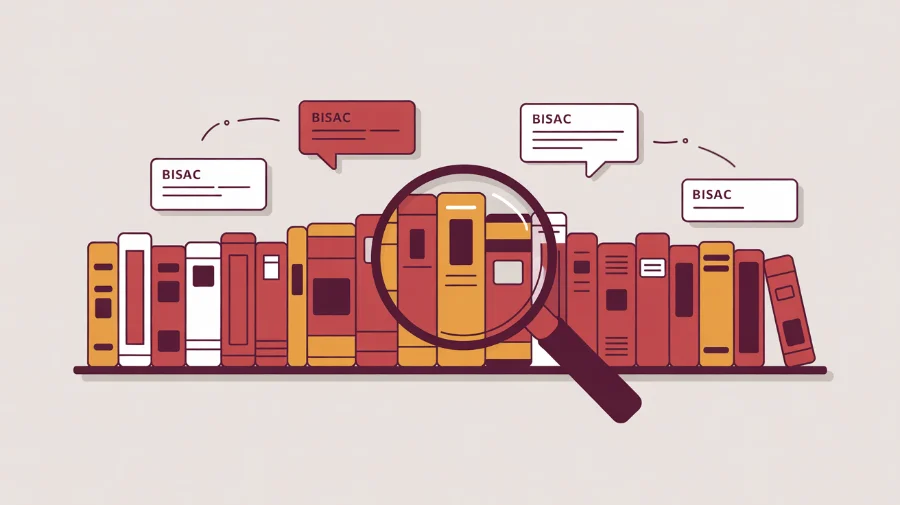
Ever wonder how bookstores and online retailers organize millions of books so you can find exactly what you're looking for? The answer is BISAC (Book Industry Standards and Communication). Learn how to use BISAC codes to help readers discover your book and boost your sales.
Imagine walking into a bookstore to find a book about fixing your plumbing, only to discover that all the books are placed randomly on the shelves. Out of a few thousand books, the perfect one for you is probably in there somewhere, it’s just going to take hours to dig it up.
Thankfully, bookstores aren’t organized like that (unless you’ve wandered into the children’s section after story hour). All books are organized by topic and then by author, making it much easier to browse just a few titles instead of a few thousand and come away with exactly what you need.
But here’s the question: How do all these bookstores and online retailers agree on how to categorize books? That’s where BISAC comes in.
What is BISAC?
BISAC stands for Book Industry Standards and Communication. In simple terms, it’s a standardized list of book categories that the entire publishing industry agrees upon.
Think of BISAC as the universal language of book categorization. Whether you’re selling through Amazon, Barnes & Noble, IngramSpark, or your local bookstore, everyone uses the same category system. This makes it easier for:
- Retailers to know where to place your book (physically or digitally)
- Readers to find books in categories they’re interested in
- Authors to accurately describe their book’s genre and topic
BISAC codes are maintained by the Book Industry Study Group (BISG), a non-profit organization that develops standards for the book industry. They update the list periodically to reflect changes in reader interests and publishing trends.
How BISAC Categories Work
You probably already know the general category for your book. You know it’s fiction or non-fiction. You know it’s science fiction, or maybe it’s self-help. These are the top-most layers, and they’re pretty easy to understand.
It’s when we get to the next layer that things get fuzzy.
Is your science fiction book about military conflict or time travel? Is your self-help book about time management or assertiveness? Is your fantasy novel high fantasy or contemporary fantasy? And these aren’t anywhere near all the options.
BISAC solves this by providing a hierarchical system of categories and subcategories. For example:
| Main Category | Subcategory | Full BISAC Code |
|---|---|---|
| FICTION | Science Fiction - Military | FIC028070 |
| FICTION | Science Fiction - Time Travel | FIC028080 |
| SELF-HELP | Time Management | SEL035000 |
| SELF-HELP | Assertiveness | SEL004000 |
| FICTION | Fantasy - Contemporary | FIC009020 |
Each BISAC code consists of three parts:
- Three-letter prefix - The main subject category (FIC for Fiction, SEL for Self-Help, etc.)
- Three-digit category number - The specific subcategory
- Three-digit sub-subcategory - Further refinement (000 if none applies)
Why BISAC Matters for Self-Published Authors
Being able to narrow down your book’s category in a meaningful way helps readers find your books easier. And since BISAC is a standard used across the industry, readers are already accustomed to searching for books using these categories.
Here’s the bottom line: If you use BISAC categories for your books, readers will find them much easier.
When you choose the right BISAC codes:
- Better discoverability - Your book shows up in relevant category searches
- Proper placement - Retailers know exactly where your book belongs
- Increased sales - Readers browsing your category can find you
- Professional appearance - Using industry standards signals you’re a serious publisher
How to Choose BISAC Codes for Your Book
Most self-publishing platforms make this incredibly easy. Amazon KDP, IngramSpark, and Draft2Digital all have built-in BISAC search tools right in their dashboards.
When you upload your book, you can choose the categories that best fit by:
- Typing in keywords related to your book’s topic
- Browsing the hierarchical list from general to specific
- Selecting multiple categories (most platforms allow 2-5 BISAC codes)
The interface is typically as simple as typing in categories and clicking your selection. A box will populate with your choices, and when your book is published, these categories will help retailers know where to place the book on their sites.
Tips for Choosing the Right BISAC Codes
Be specific, but not too specific. If your book genuinely fits a narrow subcategory, use it. But don’t force it into a category with almost no other books just to “stand out”. You’ll end up invisible instead.
Use all available slots. Most platforms let you choose multiple BISAC codes. Use them all. Your romance novel might also be historical fiction and women’s fiction simultaneously.
Think like a reader. What categories would you browse if you were looking for a book like yours? Put yourself in your reader’s shoes.
Check the competition. Look at similar books in your genre. What categories are they listed under? This can give you ideas for categories you might have missed.
Update when needed. BISG updates BISAC codes periodically. If new, more relevant categories become available, consider updating your book’s metadata.
BISAC vs. Amazon Categories (BIAC)
Here’s something that trips up many new authors: Amazon has its own category system called BIAC (Book Industry Amazon Categories) that’s separate from BISAC.
While BISAC is the industry standard used by most retailers and distributors, Amazon created their own system that’s often more granular. When you publish through Amazon KDP, you’ll select Amazon-specific categories, but IngramSpark and other distributors use BISAC codes.
The good news? There’s often significant overlap, and Amazon’s system was influenced by BISAC. So understanding BISAC will help you navigate Amazon’s categories too.
Common BISAC Main Categories
Here’s a quick reference of some common BISAC main categories you’ll encounter:
| Code | Category |
|---|---|
| FIC | Fiction |
| NON | Non-Fiction |
| SEL | Self-Help |
| BUS | Business & Economics |
| BIO | Biography & Autobiography |
| HIS | History |
| JUV | Juvenile Fiction |
| JNF | Juvenile Non-Fiction |
| YAF | Young Adult Fiction |
| YAN | Young Adult Non-Fiction |
| POE | Poetry |
| REL | Religion |
| SCI | Science |
| TRV | Travel |
| CKB | Cooking |
The Bottom Line
BISAC codes might seem like just another piece of book metadata to worry about, but they’re actually one of the simplest yet most effective ways to make your book discoverable. Unlike writing the book itself, categorizing it correctly takes just a few minutes, and the payoff in discoverability can last the lifetime of your book.
When you’re setting up your next title on Amazon KDP, IngramSpark, or Draft2Digital, take a few extra minutes to really think about your BISAC selections. Your future readers and your royalty checks will thank you.
Related Resources:

Araix Rand
Book Publicist
Araix has been helping authors with self-publishing and marketing their books. Additionally, he writes for various business and marketing blogs.
More posts by Araix Rand